/ 00London EV infrastructure

Turn underused London sites into profitable EV charging hubs.


PowerPledge rapidly deploys urban rapid EV charging hubs paired with battery storage. We partner with businesses and buildings that have spare space or electrical capacity, fund the chargers and battery through private investors, and operate the system end-to-end. The battery asset is maximised - it is not just used to unlock rapid EV charging.

Hosts earn extra revenue or reduce their own electricity costs. 
Investors access project-level infrastructure returns. 
Drivers get cheaper, more convenient rapid charging.

PowerPledge installs and operates the battery-backed charging hubs.

No host costBattery-backed chargingInvestor-fundedI n s t a l l e d  · O p e r a t e d  · M a i n t a i n e d  by  PowerPledge
/ 01 — The gap

The missing layer of urban EV charging.

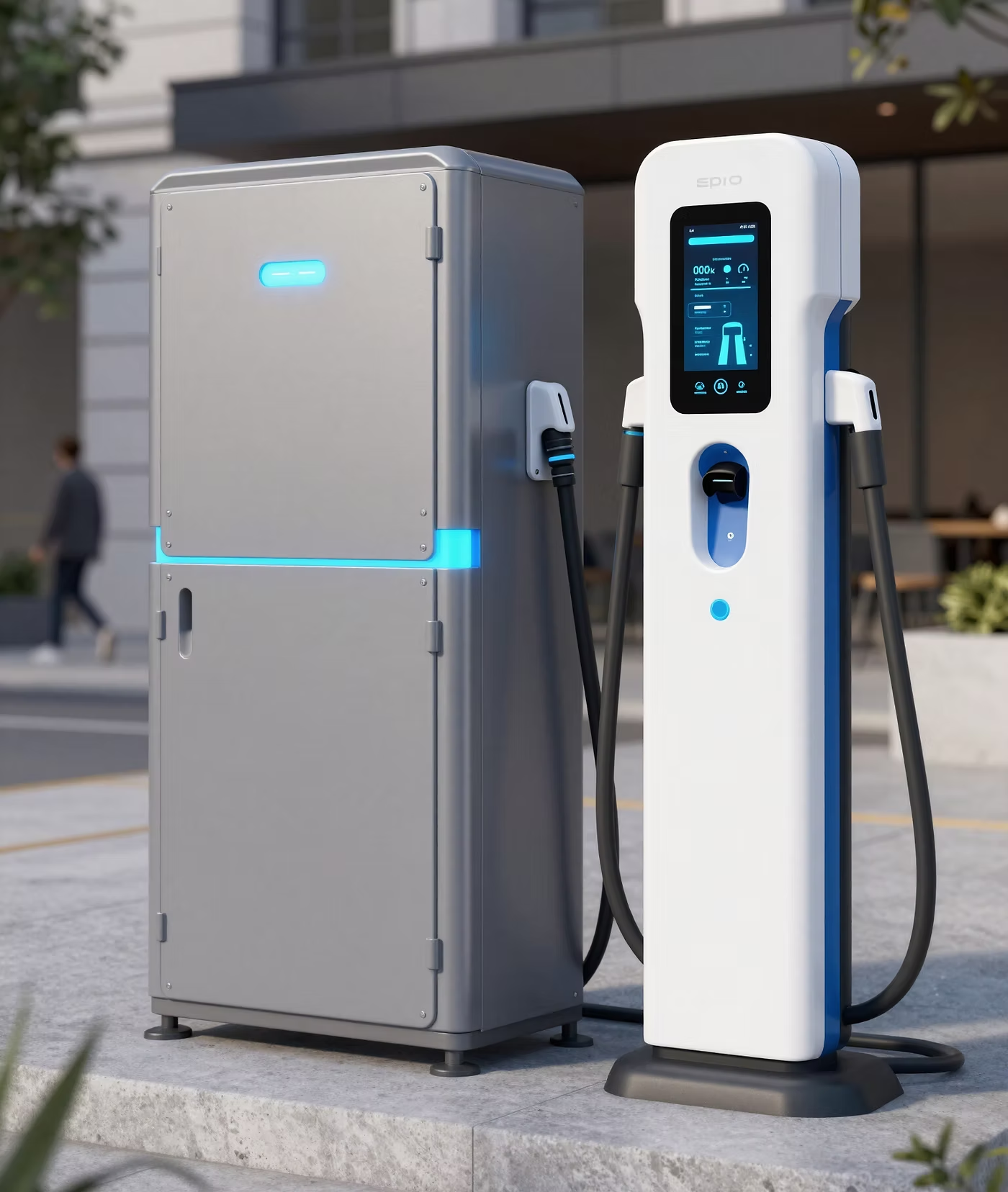
Battery storage cabinet paired with a rapid EV charger on an urban street


Most charging networks were built around one assumption: drivers charge at home, then use rapid chargers on motorways for long journeys. But in dense cities like London, many drivers do not have private parking, while taxis, Ubers, delivery drivers and high-mileage users need quick local top-ups during the day — not only slow overnight charging scattered around the city or motorway stops far from their homes. 

The problem is that rapid chargers need large power connections, and many otherwise perfect urban sites cannot support them without expensive, slow and uncertain grid upgrades. Furthermore site economics, revenue and profitability are not always top-notch.

PowerPledge solves this with battery-backed charging. The battery slowly fills from the site’s spare electrical capacity, like a cistern refilling between flushes, then releases high power when an EV needs a rapid charge. Small amounts of unused capacity become rapid charging capability — deployed faster, with lower electricity costs and no upfront cost to the host. This opens up many more locations for a plug-and-play solution, including sites with strong driver throughput and attractive economics. Because the battery can charge when electricity is cheaper and discharge when rapid charging is needed, PowerPledge can improve charging margins while still offering drivers a lower-cost rapid charge.

Unlike standalone chargers, PowerPledge hubs also have a protected revenue stack. If EV charging utilisation is lower than expected, the battery can still create value through bill reduction, peak shaving, or energy trading where grid approvals allow. This means the battery discharges back into the host site lowering its originaal electricity bill. In high-footfall locations, chargers and batteries can also support advertising screens, vending machines and other on-site revenue streams.
/ 02 — One site. Three winners.

Aligned outcomes across the stack.

Site owner

Earn from underused space.

Small businesses, building owners, landlords, car parks, hotels, gyms, pubs, offices, residential blocks — new income, no upfront cost, no operational burden, plus upgraded EV infrastructure for customers, tenants and visitors.

  • Fixed monthly site payouts
  • Share of hub profits
  • Reduced existing site electricity bills
Check if my site qualifies
Investor

Fund real London infrastructure.

Project-level investment opportunities in real London EV charging and battery assets. Depending on the structure, investors may receive a target fixed return or participate in hub profitability.

  • Site-by-site projects
  • Fixed payout or profit-linked
  • Operated by PowerPledge
Register investor interest
EV driver

Cheaper, closer rapid charging.

Convenient rapid charging near where you live, work, shop, eat, exercise or travel. Built for drivers without home charging, plus taxis, Ubers, delivery drivers and local fleets.

  • Local urban locations
  • Faster than slow public chargers
  • Designed for high-mileage use
Suggest a location
/ 03 — The battery

Rapid charging without years of grid upgrades.

Traditional rapid chargers often require expensive service upgrades, long DNO processes and uncertain approvals. PowerPledge uses battery storage to make smaller sites not only viable but also quickly deployable.

The battery charges slowly when electricity is cheaper or when the site has spare capacity, then discharges quickly when EVs need power.

For hosts · investors · drivers
More sites qualify
Smaller capacity becomes rapid-capable.
Faster deployment
No need to wait for grid upgrades that may never get approved
Better locations
Rapid chargers wherever drivers actually need them.
Lower-cost power
Battery optimisation reduces electricity costs, supporting both cheaper charging and better project returns.
/ 04 — Protected revenue stack

More than just charging revenue.

Low utilisation can kill standalone rapid charger economics. PowerPledge reduces that risk by combining multiple revenue streams at each site.

EV charging revenue
Host bill reduction
Peak shaving
Battery energy trading
Advertising screens
On-site services
/ 05 — How it works

From underused site to operating hub.

01

Site review

We assess space, access, electrical capacity, parking layout and local charging demand.

02

Hub design

We size the charger, battery and commercial model around your site.

03

Investor funding

Approved investors fund the charger-and-battery project.

04

Installation

PowerPledge manages procurement, installation, software, metering and commissioning.

05

Operation

End-to-end operation: maintenance, payments, customer support, energy optimisation.

06

Host·investor·driver benefit

Fixed payment, profit share, reduced electricity costs, upgraded ultra rapid charging infrastructure.

Final call

Have a site that could host EV charging?

PowerPledge can turn underused space or spare electrical capacity into a revenue-generating, battery-backed charging hub — with no upfront cost and no operational burden.